Most major gifts begin with a name on a list and a 1st visit, followed by months of conversations in which a donor comes to see what their gift could do. Donor cultivation is the name for that work, and when it has been planned well, the eventual ask comes as no surprise to the donor.
Below you will find the cycle stage by stage and a 12-month plan you can copy. We also cover where a gift fits, from the cultivation event to the donor recognition gifts that follow a commitment, which most cultivation guides leave out. We make those gifts for advancement and major gift teams at more than 300 institutions.
Donor cultivation builds the relationship before the ask
Cultivating a donor means building a relationship through visits and updates, and often by involving them in the work, until you understand what they care about well enough to ask for a gift that fits. It matters most for major gifts, where the ask may come only after many months of contact.
It takes time. Donorly, a fundraising consultancy, writes that most nonprofits report 6 months to 2 years to build a relationship strong enough for a major gift.
Cultivation comes before the gift and stewardship after
Cultivation happens before a gift, and stewardship begins when the gift arrives. The same donor goes through both many times over. Good stewardship of a 1st major gift is where cultivation for the next one starts, so it helps if the same person owns both plans. Our donor stewardship guide covers what happens after the gift.
The donor cultivation cycle has 5 stages
Most models describe the same journey in 4 to 6 stages. Blackbaud's donor cultivation cycle uses 5: identification, qualification, cultivation, solicitation and stewardship. Donorly uses 4, with identification and research as a single stage, and some models add retention and upgrade at the end. This guide uses the 5-stage version.
| Stage | Goal | Typical moves | Who leads | Signal to move on |
|---|---|---|---|---|
| Identification | Find likely donors | Giving history, event lists, wealth screening, referrals | Prospect research and gift officers | A name with signs of capacity and interest |
| Qualification | Confirm capacity and interest | Discovery visit or call | Gift officer | The prospect shares what they care about and agrees to stay in touch |
| Cultivation | Build trust and a shared purpose | Tours, updates, events, meetings with leadership | Gift officer, with the president, a dean or trustees | The prospect asks how they could help |
| Solicitation | Make a specific ask | Pre-ask conversation, proposal, ask meeting | Gift officer with a senior leader | A decision |
| Stewardship | Thank, report and keep the donor close | Acknowledgment, reports, recognition | Gift officer and stewardship team | Readiness for the next conversation |
Identification finds likely donors
Start with people who already know you, such as loyal annual donors, alumni volunteers, members, grateful patients and regular event guests. Prospect research and wealth screening then add an estimate of what each could give, and you end up with a short list of names worth visiting.
Qualification confirms capacity and interest
A discovery visit or call tests what the research suggested. Ask how the prospect first came to the institution and what they care about now, and let them do most of the talking. Some prospects will qualify. Others go back to the annual giving program. That is a useful result too, since it saves a year spent cultivating someone who was never going to make a major gift.
Cultivation builds trust over months
This is the longest stage. Fundraisers call each contact a move, and a good move has a purpose you could write down beforehand, whether that is showing the prospect a program they have not seen or finding out how they feel about a named fund. Tours, impact updates, small dinners and meetings with the people a gift would support all count.
Solicitation makes a specific ask
The ask names a purpose and an amount, along with the period over which the gift will be paid. The gift officer normally makes it with a senior leader in the room. A pre-ask conversation a few weeks earlier tests the purpose and the amount, so nothing in the formal ask comes as a surprise.
Stewardship keeps the donor close after the gift
Acknowledge the gift quickly. After that the donor should hear how it is being used, and be recognized in a way that suits the size of the gift. This is also where the next cultivation cycle starts. Our guide to stewardship and donor impact reports covers the reporting side.
Every major donor prospect needs a written plan
The plan starts with a prospect profile
- Capacity: what the prospect could give, from research and screening.
- Affinity: how close they are to the institution, and to which part of it.
- Propensity: their giving history, with you and elsewhere.
- Relationship owner: the gift officer responsible.
- Gift purpose: the program, fund or project that fits their interest.
- Target amount and target ask date.
- Planned moves, each with a date.
- Notes from every contact.
A 12-month sample plan for 1 major donor
| Month | Move | Owner | Goal |
|---|---|---|---|
| 1 to 2 | Discovery visit | Gift officer | Learn the prospect's interests, history with you and giving priorities |
| 3 | Behind-the-scenes tour | Gift officer and a program lead | Show the work up close |
| 4 | Impact update tied to the prospect's interest | Gift officer | Connect their interest to a specific need |
| 5 | Cultivation event with the president or dean | President or dean | Build a relationship with leadership |
| 6 | Meeting with a student, physician or curator the gift could support | Program lead | Make the purpose personal |
| 7 to 8 | Invitation to an advisory board or committee | Gift officer and the committee chair | Give the prospect a part in the work |
| 9 | Pre-ask conversation | Gift officer | Test the purpose and the amount |
| 10 to 12 | The ask, then acknowledgment and the recognition gift | Senior leader and gift officer | Secure and thank the commitment |
Each move has an owner and a date
Moves without an owner tend not to happen. Put a name and a date beside every row, and log notes in the donor database the same day while the details are fresh, including anything the prospect asked that still needs an answer. If a move slips, reschedule it that week. Once a month, go through every active plan with your director, prospect by prospect, and agree the next move before the meeting ends.
These strategies move major donors toward a gift
- Research before the 1st visit, then listen. Know the prospect's giving history and connections before you meet, then spend most of the meeting asking questions, such as what first brought them to you and what they would change if they could. Write the answers down the same day.
- Bring in leadership at the right moment. A visit from the president, a dean or a trustee tells the prospect the institution takes the relationship seriously. Save it for a moment that needs it, such as the meeting before an ask. Trustees who open doors deserve thanks of their own, which our page on board member gifts covers.
- Show impact in the prospect's area of interest. A prospect who cares about nursing wants to hear about nursing, such as how a graduate got on in their 1st year on the ward, or the equipment the program still lacks. General institutional news can wait for the annual report.
- Offer a role. A seat on an advisory board or a campaign cabinet gives a prospect a part in the work and a reason to keep coming back. Someone who has helped shape a program usually starts thinking about how it will be paid for.
- Use peer introductions. Ask a donor you have stewarded well to host a small lunch and explain, in their own words, why they gave. Prospects often take that more to heart than anything a gift officer could say.
- Keep a steady cadence. Long silences cool a relationship. Plan a contact every 4 to 6 weeks, even if it is a short note.
Leadership has a defined part
The president, deans, department heads and trustees each bring something a gift officer cannot. A president speaks for where the institution is heading. Deans and physicians know the work closely enough to answer whatever a prospect asks about it, and trustees can talk about their own giving as peers. Their time is scarce, so write their moves into the plan in advance: which prospect, which month, what the meeting is for and what the gift officer will brief them on beforehand.
Afterward, tell them what came of it. Leaders who see their visits lead to gifts make time for the next visit, and the trustees who open doors for you are donors in their own right. Our guide to gifts for board members covers how institutions thank them.
Cultivation ideas change with each stage
- Identification: alumni event attendance lists, wealth screening, referrals from trustees and current donors.
- Qualification: a discovery visit, a short call, a survey of engaged donors.
- Cultivation: tours, lectures, small dinners, campaign launch events and a handwritten note after each meeting. Our donor appreciation event ideas include formats that suit prospects too.
- Solicitation: a proposal written around the prospect's stated purpose, presented in person.
- Stewardship: an impact report, recognition at the right level and a note on each anniversary of the gift.
A gift fits best after the commitment
Gifts can appear at several points in the cycle, and each has a different job. Most belong after the donor commits.
Small tokens suit cultivation events
Campaign launch events are often used for cultivation. Prospects who are not yet ready to give hear the institution's plans in the same room as donors who already have, and seeing those donors there tells a prospect that other people believe in the work.
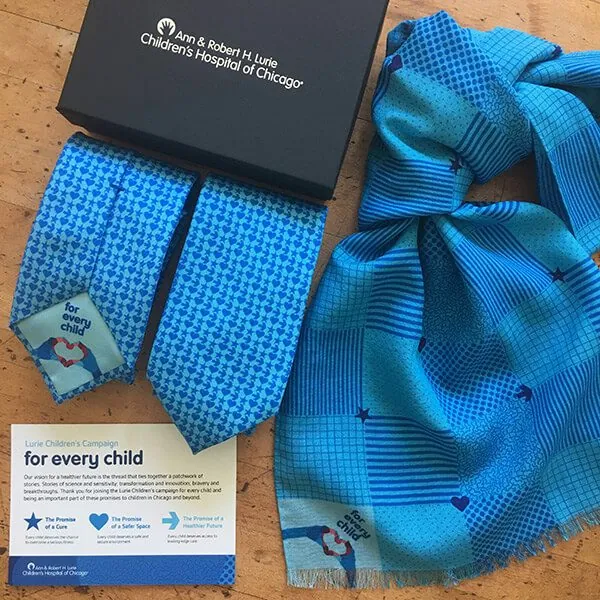
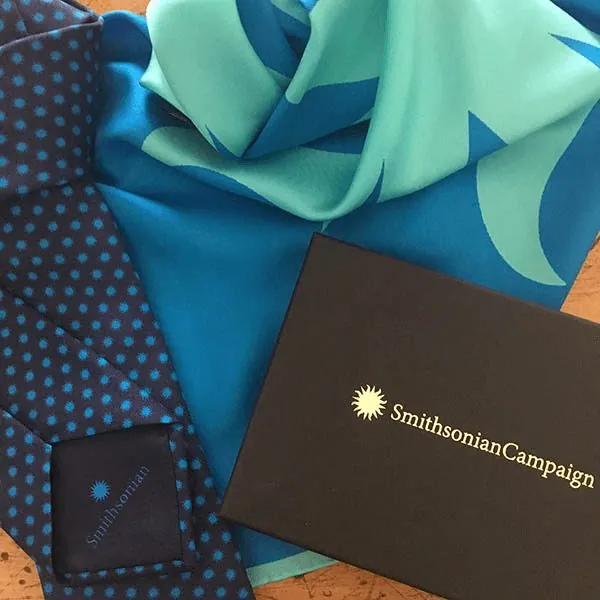
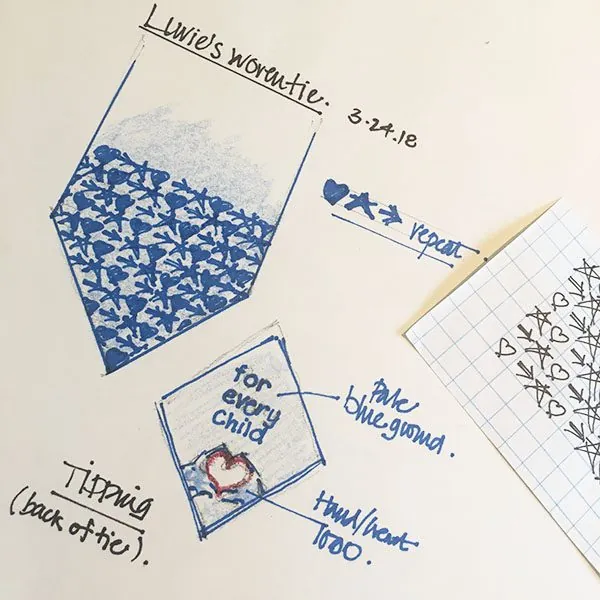
Before a commitment, keep anything you give modest and shared: the same piece for every guest at an event. A lapel pin, from $15, works as a token of belonging. A campaign launch can carry its own emblem. We made a pashmina and silk tie for the launch of Lurie Children's For Every Child campaign, and a silk scarf and tie built on the Smithsonian sunburst for the Smithsonian Campaign.
No gift belongs in the ask
Keep gifts out of the solicitation itself. A gift handed over with a proposal can read as pressure, or as a trade, and it distracts from the purpose you are asking the donor to fund.
The recognition gift follows the commitment
Once the donor commits, the recognition gift is part of the thanks. It works best when it is personal to the institution, drawn from something only that institution has.
Columbia University
Enamel cufflinks, a sand-cast brass coaster, a gilt wire paperweight and a Teachers College silk scarf and tie, each drawn from details on Columbia's campus.
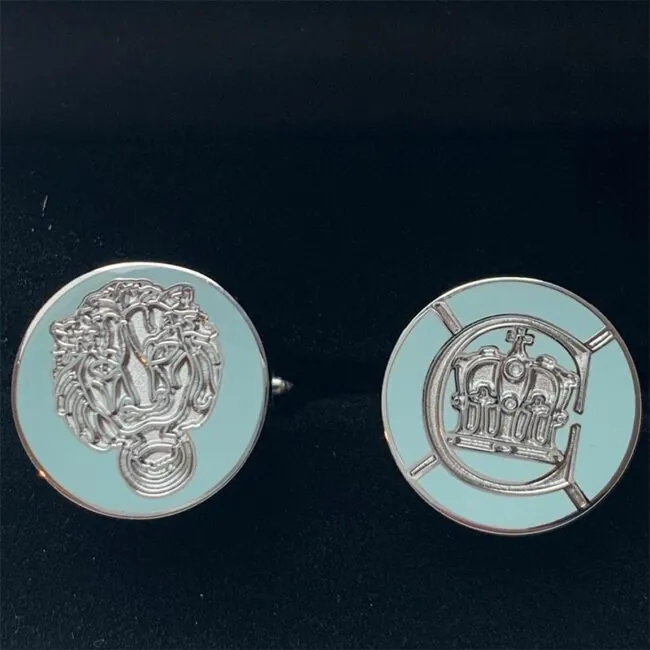
University of Chicago
A silk scarf and tie drawn from a Babylonian lion mosaic at the Oriental Institute, with a Saxony wool scarf and a blazer badge, made for the University of Chicago.
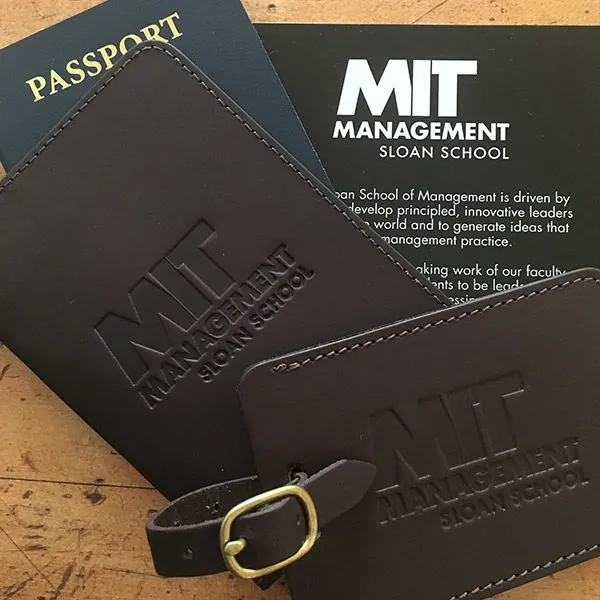
MIT Sloan
An embossed leather passport holder and luggage tag for MIT Sloan's top donors.
Boston College
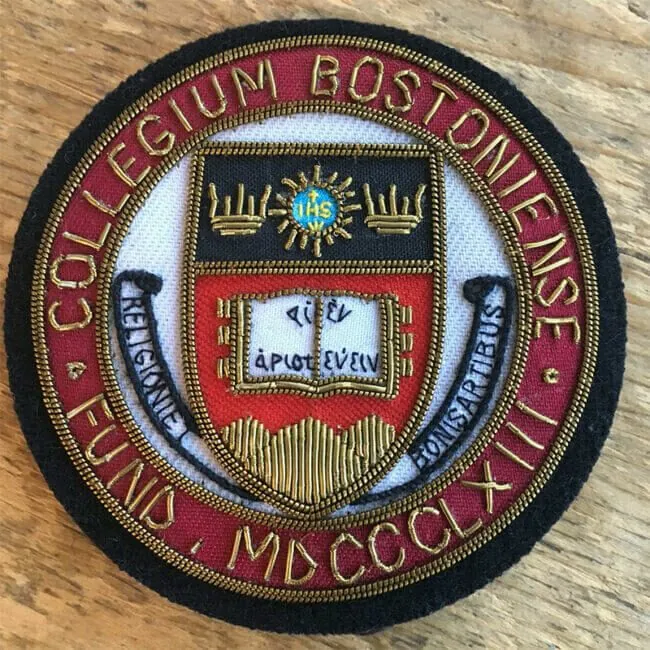
A medallion badge in gold and silver gilt wire and a Saxony wool scarf with the Presidential seal, handmade for Boston College.
Stewardship gifts mark anniversaries and milestones
Milestones keep coming after the gift, from the 1st report on a new fund to a move into a higher giving society. The close of a campaign can even have a collection of its own. After its $6.36 billion campaign, we curated a made-to-order Alumni Collection for Cornell University. Our page on stewardship gifts for major donors shows more.
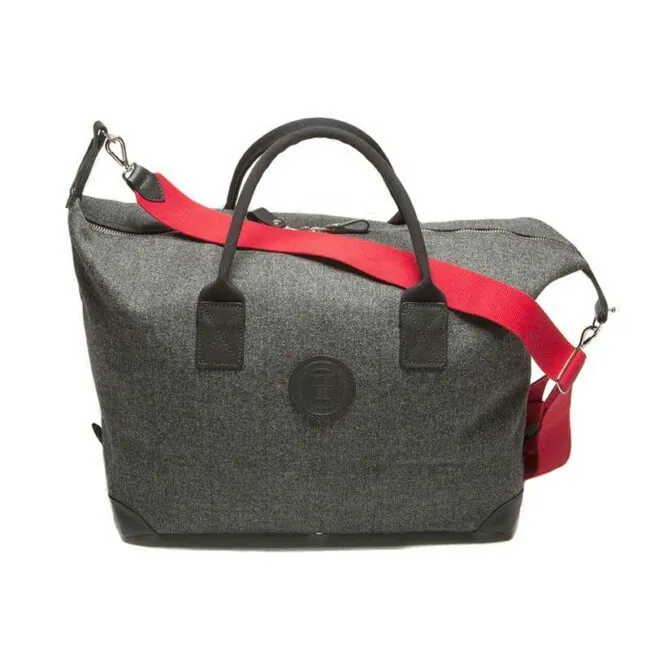
"Our Harris Made Alumni Collection is gorgeous! We have nothing but praise. I highly recommend working with Harris Made." James Best, General Merchandise Manager, The Cornell Store, Cornell University
The order belongs on the campaign calendar
A recognition gift design serves a group, such as every donor at a giving level or every leader in a campaign, and the requested minimum is 125 pieces per design. Each design starts as a hand-drawn sketch, and samples are made for approval. Most projects take 8 to 16 weeks, so place the order a season before the commitments you expect, and ask us about timing for a specific date. How a project works sets out each step.

Tax rules limit what donors can receive
When a donor receives goods or services in return for a gift, the deductible part of the gift is generally limited to the amount by which it exceeds the value of what they received. Low-cost items and benefits of insubstantial value can be disregarded, within dollar limits that are adjusted each year. Internal Revenue Service Publication 1771 explains these rules and the written disclosure a charity owes a donor. Confirm the current limits, and how they apply to your gifts, with your own tax adviser.
A few numbers show whether cultivation works
- Prospects per gift officer. Size each portfolio so the gift officer can actually visit every prospect in it.
- Moves per prospect per quarter. A count of purposeful contacts, each logged with its goal.
- Days since last contact. Run it for every prospect every month, and act on the longest gaps first.
- Time from qualification to ask. A plan that keeps slipping usually means the purpose or the amount is not yet right.
- Ask-to-close rate. The share of asks that become commitments.
- Average gift against target. Whether asks land at, above or below the amount the plan set.
We give no benchmarks here, because the right figures depend on your portfolio sizes and gift levels. Track your own for 4 quarters, then set targets against them.
The 80/20 rule shapes a major gifts strategy
The 80/20 rule is a rule of thumb: about 80% of dollars come from about 20% of donors. Treat it as a planning guide rather than a measured law, and check it against your own donor file.
For a major gifts strategy, it means putting gift officer time where the dollars are. Give each officer a defined portfolio of prospects and review it every quarter. Prospects who have stopped moving forward can go back to the annual giving program, which keeps the portfolio active.
When the commitments come, our page on donor recognition gifts shows how institutions thank the donors at the top of that pyramid, and you can start a project whenever you are ready.
Frequently asked questions
What does it mean to cultivate a donor?
To cultivate a donor is to build a relationship through visits and updates, and by involving them in the work, so that a well-matched ask feels like the natural next step.
What is the difference between donor cultivation and stewardship?
Cultivation comes before a gift and stewardship after it. Good stewardship then becomes cultivation for the next gift.
What are the 5 stages of donor cultivation?
Identification, qualification, cultivation, solicitation and stewardship.
How long does major donor cultivation take?
Often 6 months to 2 years. Donorly writes that most nonprofits report a timeline in that range for a major gift.
What is the 80/20 rule in fundraising?
A rule of thumb that about 80% of dollars come from about 20% of donors. It is a reason to focus gift officer time on the top of the donor pyramid.
Should you give gifts to prospects during cultivation?
Keep anything given before a commitment modest and shared, such as an event token, and save the main recognition gift for after the commitment. Benefits a donor receives can reduce the deductible part of a gift, so check Internal Revenue Service Publication 1771 and confirm with your tax adviser.