Legacy giving versus planned giving is mostly a question of timing. A planned gift is any charitable gift arranged in advance, and it can take effect during the donor's life or at death. Legacy gifts are the ones that take effect after death, usually through a will, a trust or a beneficiary designation, which makes them a subset of planned gifts.
The difference matters most when you decide how to thank the donor. A legacy gift arrives after the person who made it has died, so any thanks they will hear has to come now. That is the job of a legacy society, and most of this guide is about running one well.
Legacy giving is a kind of planned giving
Steier Group puts it in 1 line: "All legacy gifts are planned gifts, but not all planned gifts are legacy gifts." In practice, many advisers and institutions use the 2 terms interchangeably. With donors, legacy is often the warmer word, because it speaks to what they leave behind.
| Aspect | Planned giving | Legacy giving |
|---|---|---|
| What it covers | Any gift arranged in advance | Gifts that take effect after the donor's death |
| Timing | During life or at death | At death |
| Typical vehicles | Gift annuities, charitable trusts, appreciated securities, bequests | Bequests, beneficiary designations, the remainder of a charitable trust |
| Donor motivation | Give more than income allows, sometimes with income or tax benefits | Leave something lasting to an institution they love |
| Who uses the term | Gift planners, advisers and development staff | Donors, and staff when they talk with donors |
Planned gifts fall into 2 groups
The types of planned giving divide by when the institution receives the gift. What follows is general information. Donors should confirm the details and any tax treatment with their own adviser, and the Internal Revenue Service sets out the rules on charitable contributions in Publication 526.
Some gifts take effect after the donor's death
| Gift | How it works |
|---|---|
| Bequest | A gift in a will or living trust: a set amount, a share of the estate, or what remains after other gifts |
| Beneficiary designation | The institution is named as a beneficiary of a retirement account, a life insurance policy or a bank account |
| Charitable remainder trust | The trust pays the donor or another person an income, and the institution receives what remains when the trust ends, often at the donor's death |
Some gifts take effect during the donor's life
| Gift | How it works |
|---|---|
| Charitable gift annuity | The donor makes a gift and receives fixed payments for life |
| Charitable lead trust | The trust pays the institution for a set term, then the remainder passes to the donor's heirs |
| Appreciated securities | Stock is given directly to the institution instead of being sold first |
| Qualified charitable distribution | A donor of eligible age gives directly from an individual retirement account |
| Real estate and retained life estates | A home or land is given now, sometimes with the right to live there for life |
Planned giving benefits donors and institutions
The benefits of planned giving run both ways. A donor can often give more through a planned gift than their income alone would allow, and some vehicles pay an income for life. A bequest leaves donors in control of their assets while they live, since a will can be changed. Some planned gifts carry tax benefits too, which donors should confirm with their adviser.
Institutions get future revenue that grows the endowment, and a reason to stay close to loyal donors for decades. Bequests are also a large share of American giving. Giving USA reports that bequests reached $62.19 billion in 2025, up 19.7% on 2024, about 10% of the $617.20 billion given that year.
Planned giving examples show how each gift works
These 3 planned giving examples use invented donors. Each one shows when the donor joins the legacy society and when the institution finally receives the gift.
A share of an estate
A retired teacher puts a clause in her will leaving 10% of her estate to the university where she trained. When she tells the gift planning office, it welcomes her into the legacy society that same year, though the university receives nothing until her death, decades later.
A gift annuity that pays income
A couple in their 70s fund a charitable gift annuity with a hospital foundation and join its legacy society the day the annuity is signed. The annuity pays them a fixed amount for the rest of their lives. What remains goes to the foundation after the second of them dies.
A retirement account beneficiary designation
An alumnus names his college as beneficiary of part of his individual retirement account, using a form from his account provider. Once he lets the alumni office know, he joins the legacy society, and the college receives that share when he dies.
A legacy society thanks donors while they are alive
A legacy society is a group an institution creates to recognize donors who have told it about a planned gift. It exists because of a stewardship problem particular to legacy gifts. The money arrives after the donor's death, often decades after the decision, so the thanks has to happen during the donor's lifetime.
Membership starts when a donor shares their plans
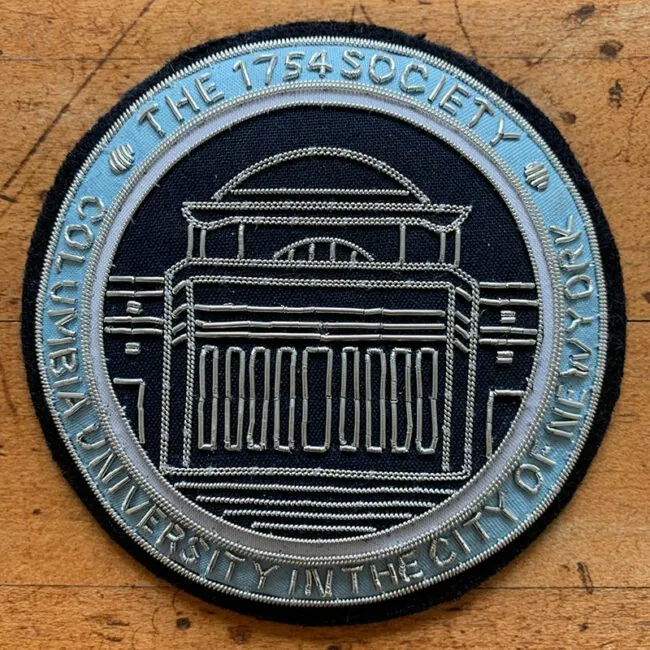
Make telling you easy. A short form is enough, and some donors will simply mention it in an email. Columbia's 1754 Society, for example, recognizes alumni and friends who remember the university in their will, trust or other estate plans. It sets no minimum gift and welcomes members of all ages.
Clear criteria make the society easy to join
- A documented intention. A copy of the will clause, a beneficiary form or a simple signed statement of intent.
- No amount required. Many donors would rather not share the figure, so ask only for the intention.
- Anonymity on request. Some members will not want to be listed by name.
- A clear rule on minimums. Say plainly whether a minimum applies, so no one wonders.
The benefits should feel personal
- An annual gathering with the president or dean.
- A letter from the president when a member joins, and each year after.
- A listing in the honor roll, for members who want one.
- A membership marker they can wear or keep.
A society name should carry the institution's history
The best legacy society names come from the institution's own story, such as a founder or a founding year, a landmark, a motto or a campus symbol. Columbia's society is named for the year the university was founded, 1754.
Giving societies and legacy societies recognize different things
A giving society recognizes annual or cumulative giving at set levels, while a legacy society recognizes a planned gift of any size. Many institutions run both, and a donor can belong to each.
Donor level names belong to the same family
Keep donor level names in the same family as the society name. One institution might name its levels for founders and benefactors, and another for its campus buildings in order of age. Avoid anything that reads like a price list. The marker can draw on the same story, so that the name and the object make sense together.
"Harris Made designs are made with such precision, sophistication, and embody a rich story of tradition. They are the perfect recognition gifts for our most loyal alumni and friends." Emily Abrahamson, Donor Engagement, University of Chicago
Membership markers make the society visible
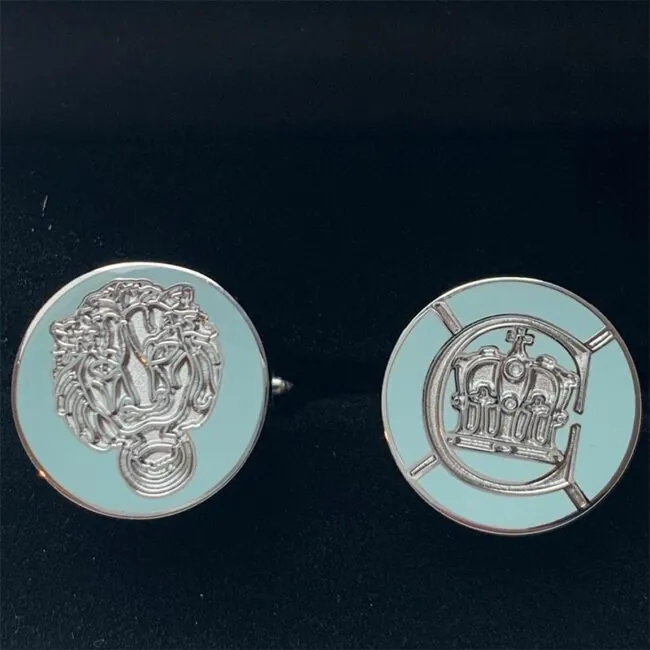
Most legacy societies meet once or twice a year. A marker is something members wear to events or keep on a desk between those meetings, and others in the community come to recognize it. Every Harris Made design is exclusive to the institution and never sold to anyone else, so the only way to have the marker is to join. See our stewardship gifts for giving societies.
A pin or brooch can be worn at every society event
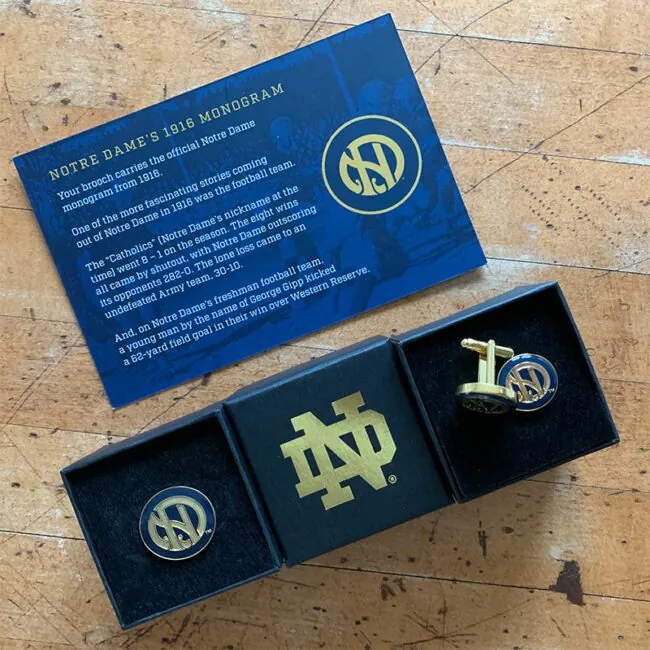
A lapel pin starts from $15. A brooch, from $38, is what our catalog calls a quiet emblem of belonging and service, and enamel cufflinks from $45 suit members who will wear them to dinners. See Notre Dame's cufflinks and brooch.
"We cannot thank you enough for the extraordinary heirloom-quality gifts that reflect our deep appreciation for our Benefactors. With your help, we have created unforgettable memories that they will carry with them and share within the Notre Dame community. Collaborating with you has been a true delight!" Jessica Reasons, The University of Notre Dame
A medallion badge suits the most formal occasions
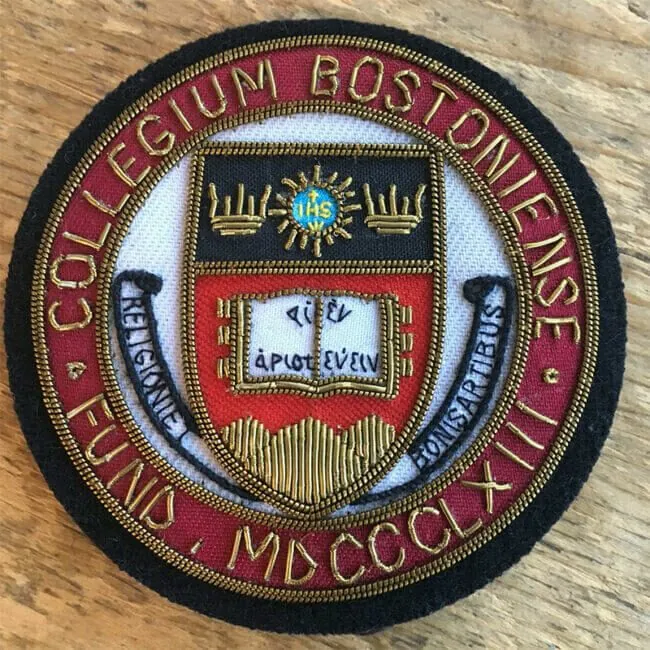
A medallion or blazer badge, from $52, is handmade with gold and silver gilt metal wire thread, the same bullion thread used for the Guards' uniforms at Buckingham Palace. A magnetic, felt-covered back makes it easy to put on and take off, and when it is not being worn it makes a useful paperweight. Boston College's medallion badge and scarf show the kind of piece, and you can read how our badges are made.
A scarf in the institution's colors marks members at a glance
A Saxony wool scarf from $58 or a bespoke silk scarf from $65 makes members easy to spot in a crowded room. Saxony scarves were first introduced to students at Oxford and Cambridge as a mark of academic excellence, which gives the piece a history of its own. Browse scarves in the catalog.


The box tells the story
Every gift is hand-wrapped in a foil-embossed luxury box branded for your institution. Your thank-you message is printed on a notecard inside, with the gift's provenance on the reverse. For a new legacy society member, that card can say what the society is named for and why.

Emma Harris, our designer and co-founder, draws each design from scratch around your colors and crest and the story of your society. Samples are made for your approval. Most projects take 8 to 16 weeks, with a requested minimum of 125 pieces per design.
A yearly calendar keeps legacy donors close
Thanking legacy donors can go on for decades, and a simple calendar keeps it from lapsing.
In the first year
Welcome new members within weeks
Within weeks of hearing about the plans, a new member should have a letter from the president or dean and their membership marker. A call from the gift planner helps too.
Invite them to the society event
An annual lunch or dinner, with a student or researcher whose work planned gifts support.
Every year after
Report what realized gifts funded
Members want to see what earlier legacy gifts made possible. Our post on donor impact reports has a template.
Mark membership anniversaries
A note on the 5th and 10th anniversaries of joining, and an honor roll listing for those who want one.
When a gift is realized
With the donor's permission, invite family to society events while the donor is alive. When the gift arrives, thank the heirs and the executor, who may become donors themselves. Our donor stewardship guide covers the rest of the year.
Our stewardship gifts page shows the markers we make for giving societies, and there are more client stories to read. When your society is ready for a marker of its own, start a project.
Frequently asked questions
What does legacy giving mean?
Legacy giving means arranging a charitable gift that takes effect after your death. It is usually made through a will, a living trust or a beneficiary designation on a retirement account or life insurance policy, and it lets donors support an institution beyond their lifetime.
Is planned giving the same as legacy giving?
Nearly. Every legacy gift is a planned gift, and some planned gifts, such as charitable gift annuities, start during the donor's life. Many people use the 2 terms interchangeably.
What is a legacy society?
A legacy society is a group an institution creates to recognize donors who have included it in their estate plans. Membership usually starts when the donor tells the institution about the plan, long before the gift arrives.
What is the difference between a legacy society and a giving society?
A giving society recognizes giving at set levels, in a year or over a lifetime. A legacy society recognizes a planned gift, whatever its size.
How should a nonprofit thank a planned giving donor?
Thank them as soon as they share their plans, and welcome them into the legacy society with a marker of membership. After that, keep in touch every year with a letter and an invitation to the society event, and share news of what legacy gifts have funded.
Do you need a large estate to make a legacy gift?
No. A bequest of any size or a beneficiary designation counts, and some legacy societies set no minimum at all. Columbia's 1754 Society, for example, has no minimum gift.