People who have been well cared for in a hospital often want to give something back, and many of them have no idea how to go about it. Grateful patient program best practices are about noticing that wish and acting on it while keeping the patient's privacy intact. Done well, the gift that follows helps the next patient through the door.
We wrote this for hospital foundation presidents, major gift officers and donor relations teams. Harris Made comes in near the end, since we design donor recognition gifts for hospitals that thank grateful patients and the caregivers they name, but most of this guide is about the steps before that, which decide whether the thanks is welcome at all. Hospitals we have made gifts for include Lurie Children's Hospital of Chicago, Johns Hopkins Medicine, Massachusetts General Hospital and Children's National Health System.
A grateful patient program turns a patient's thanks into philanthropy
A grateful patient program is a hospital foundation's system for finding patients and families who want to give thanks for their care, and for giving them a way to do it. In practice, physicians and nurses refer patients who express gratitude, and the foundation reaches out once the stay is over. A gift, if there is one, follows when the patient is ready.
A grateful patient is simply a patient, or a member of their family, who wants to support the hospital because of the care they received. Plenty give once and move on, while others become loyal donors for decades and remember the hospital in their wills.
Without some structure a program depends on luck. At the least, that means an agreed way to refer, a privacy process, a named owner for each step and a plan for thanks.
The program in brief
- Agree the program with hospital leadership, physicians and your privacy officer before launch.
- Make referral easy for physicians and nurses, and always tell them what happened.
- Use only the patient information the federal Privacy Rule allows, and offer a way to opt out in every message.
- Reach out after the stay, never during it, and lead with thanks.
- Thank patient donors quickly, and keep their care out of every thank-you.
- Measure referrals, new donors and retention, and review them with physician leaders.
In a children's hospital, the grateful donor is the family
When the patient is a child, the gratitude belongs to parents and grandparents, and it tends to come back at the child's milestones, such as the end of treatment or the anniversary of a stay. A program in a pediatric hospital can plan around those dates. It helps to write to the family as a whole, and siblings and grandparents may want a way of their own to take part.
Patient privacy rules set what the foundation can use
This section summarizes the federal rule as published, as general information rather than legal advice. State laws can be stricter than the federal rule, and your privacy officer or healthcare counsel should review your program before it starts.
The rule in question is the Privacy Rule under the Health Insurance Portability and Accountability Act, often called HIPAA. Its fundraising provision sits in Title 45 of the Code of Federal Regulations, section 164.514(f), which you can read in full on the official electronic code.
The rule lists 6 kinds of information a foundation may use
Section 164.514(f)(1) says a covered entity, which here means the hospital, "may use, or disclose to a business associate or to an institutionally related foundation, the following protected health information for the purpose of raising funds for its own benefit", without the patient's authorization. The list is short:
- Demographic information relating to an individual, including name, address, other contact information, age, gender, and date of birth
- Dates of health care provided to an individual
- Department of service information
- Treating physician
- Outcome information
- Health insurance status
That is enough to know who to contact, when they were treated, which department cared for them and which physician to involve. Use the dates and the outcome to make sure no one is approached at the wrong moment, for example a family who has lost someone.
Every message must offer a way to opt out
The rule attaches conditions in section 164.514(f)(2). With each fundraising communication, the hospital "must provide the individual with a clear and conspicuous opportunity to elect not to receive any further fundraising communications", and the method may not cause "an undue burden or more than a nominal cost". Treatment or payment cannot depend on the patient's choice. A patient who opts out must not be sent further fundraising communications under this provision, and the hospital may offer a way to opt back in.
Before any of this, the hospital's notice of privacy practices must tell patients that the hospital may contact them to raise funds and that they have a right to opt out, as section 164.520 requires. Check the notice before the first letter goes out.
In practice, the opt-out goes on every letter and email, and into the call scripts as well. Keep 1 opt-out list that every system reads from, and test it before launch.
Diagnosis sits outside the list
Nothing on the list describes a patient's diagnosis or the nature of their treatment. The general rule in section 164.508 is that a covered entity "may not use or disclose protected health information without an authorization that is valid under this section", except where the rule permits it elsewhere. So if the foundation wants to use anything beyond the 6 categories, the question goes to the privacy officer first, and the answer may be the patient's written authorization.
The same caution applies when a patient tells a gift officer about their illness. Patients are free to share their own story, but ask the privacy officer before the foundation writes it down or uses it anywhere.
Leadership and physicians must agree before launch
A program the foundation builds alone will stall at the first physician who declines to refer. Before launch, bring the people who must agree into the same room:
- Hospital leadership, who approve the program and the budget.
- Physician and nursing leaders, who shape how referrals work on the units.
- The privacy officer and compliance office, who review the process, the notice of privacy practices and the opt-out.
- Information technology, because referrals and opt-outs live in the hospital's systems.
- The foundation's own staff, with a named owner for each step from referral to thanks.
Agree the staffing and the budget at the same time, because a referral that sits for 3 weeks waiting for a gift officer has usually gone cold.
Physicians need time to trust the foundation
The Association for Healthcare Philanthropy describes how Tampa General Hospital's development team treats physicians as a second portfolio, starting with 30-minute monthly meetings with likely physician partners. Speakers in the same account put the time it takes to build a strong physician relationship at about 3 years. Plan for that, because a physician who does not yet trust the foundation will not send patients to it.
Give each physician a simple way to refer and a report back
Physicians refer when it is easy and when they hear what happened. Offer 1 route, perhaps a short form or a button in the records system, and promise a reply. Then keep the physician posted as things move, right through to a gift if one comes. Physicians who never hear back tend to stop referring.
Referrals from physicians and nurses fill the pipeline
Physicians are the obvious referrers, but nurses spend long hours with patients and families and often hear the thanks first. The same Association for Healthcare Philanthropy account describes how Hackensack Meridian Health added a grateful patient referral button to its electronic records system. The patient's details are pulled into a message automatically, and the nurse adds a note about the patient's gratitude before it goes to the foundation.
Train staff on what they can share
Teach staff how to refer, but spend more of the training on recognizing gratitude without prompting it and on what to leave out. A nurse can tell the foundation that a family wants to say thank you. The details of the care stay with the care team unless your privacy officer has agreed otherwise.
Thank the referrer when a gift results
When a referral leads to a gift, tell the physician or nurse who made it, and thank them. The Association for Healthcare Philanthropy's account recommends celebrating each gift, especially first gifts, because the celebration thanks the referring physician and encourages colleagues to refer too. A handwritten note from the foundation president does this well. A small token, such as a lapel pin in the hospital's colors, can mark the occasion; for physicians, agree any gift with your compliance office first, as our Doctors' Day gift guide explains.
Screening and timing find the right patients
Not every referral leads to a major gift, and a program needs a way to decide where a gift officer's time goes. Wealth screening and giving history, read alongside the referral itself, give you a prioritized list, and it should carry as little as possible. In the Association for Healthcare Philanthropy account, Providence's lists carry contact information and the referring physician "but no other encounter information", which keeps the privacy question simple.
Reach out after the stay, never during it
No one should be asked for a gift while they are a patient. The first contact belongs after discharge, while the experience is fresh, and it should open with thanks for choosing the hospital and an invitation to see its work. Agree a contact window with your physicians and privacy officer, and write it down so the whole team works to the same one.
The path from referral to thanks
| Stage | What happens | Who leads |
|---|---|---|
| During the stay | Care only. A caregiver may notice gratitude and refer. | Physicians and nurses |
| Referral | The foundation receives the patient's name, the referring caregiver and a short note. | The referring caregiver |
| Review | Opt-out check, outcome check and screening before anyone is contacted. | Foundation research staff, following the privacy officer's process |
| First contact | A letter or call of thanks and an invitation, with a way to opt out. | Gift officer |
| Cultivation | Visits, a tour, a lunch with hospital leaders. | Gift officer and hospital leaders |
| The request | A conversation about a gift, when the patient is ready. | Gift officer, with the physician informed |
| Thanks and stewardship | A fast thank-you, reports on impact, recognition and a note to any caregiver named. | Foundation |
Outreach begins with gratitude and the request comes later
The first meetings should be about the patient's experience of the hospital and what the hospital is doing next, so invite them to tour a unit that is being rebuilt or to meet a researcher. Never open with their care. If their own story comes up, let the patient be the one to raise it.
Hospital leaders can help at little cost. The Association for Healthcare Philanthropy account describes a weekly lunch at which a hospital president hosted up to 4 patients, with the foundation handling the invitations and briefing notes. A fixed date in the president's calendar kept it going.
The request comes when the patient is ready, and it should connect to something they have already seen, such as the unit they toured.
Thanking grateful patient donors protects their privacy
A donor whose gift grew out of an illness should be thanked quickly and personally, with no mention of their care unless they have raised it themselves. Keep diagnosis and treatment out of every letter, email, event introduction and honor roll, and if a donor has spoken publicly about their care, ask before you repeat it.
Initial gifts need a fast thank-you
With a first gift, a patient is also finding out how the foundation behaves. Acknowledge it within days, from someone the patient has met, and follow it with an early update on what the gift is doing.
A first thank-you letter
Dear [Name],
Thank you for your gift to the [Hospital] Foundation. It will go to [the fund or unit], where it will [what it pays for]. I will write again in [month] to tell you what it has made possible.
Your generosity means a great deal to the people who work here, and I would welcome the chance to show you their work in person.
With gratitude,
[Name], President, [Hospital] Foundation
The letter makes no mention of the patient's stay, including the department and the physician who cared for them. There are more templates in our guide to thank you letters for donations.
Caregiver tributes thank 2 people at once
A grateful patient may give in honor of a nurse or physician. When they do, thank the donor for the tribute as well as the gift, and, with the donor's permission, tell the caregiver and pass on the donor's words. Share the amount only if the donor wants it shared.
A note to the honored caregiver
Dear [Name],
A patient you cared for has made a gift to the [Hospital] Foundation in your honor. They asked us to pass on these words: "[the donor's message]".
Their gift will support [the fund or unit]. Thank you for the care that inspired it.
[Name], President, [Hospital] Foundation
Name the donor only if they have agreed to it, and check the note with your privacy officer when you set up the program.
Impact updates keep the donor close
After the first thank-you, keep reporting on what the gift did and invite the donor to events as they come up. Our donor stewardship guide sets out a calendar for this by giving level, including when to mark the anniversary of a gift.
A campaign gives grateful patients a cause to join
Grateful patients and families are among the first people to tell about a campaign, because they already know what the hospital does, and a campaign gives their gratitude something specific to support.
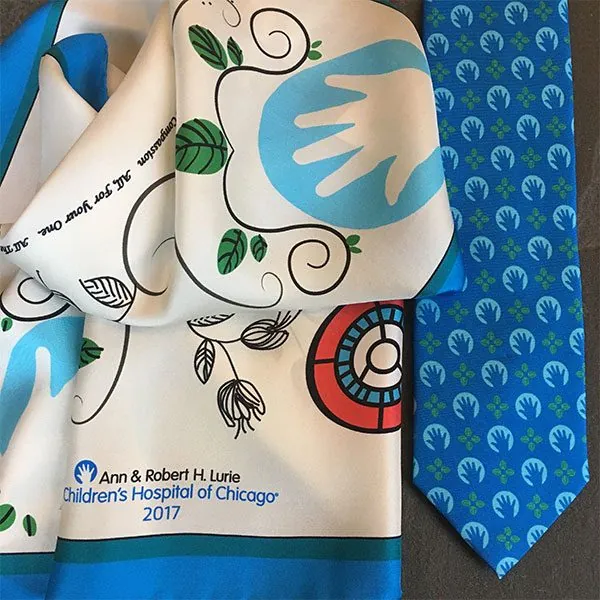
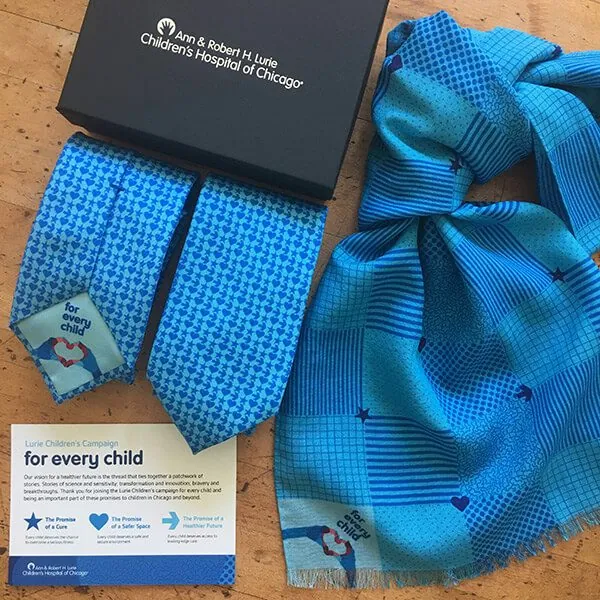
Lurie Children's Hospital in Chicago marked the launch of its For Every Child campaign with a pashmina and silk tie, which we designed and made in Britain. A launch gift is something people can wear to the campaign's events, and it tends to start conversations about the campaign. Read about the Lurie Children's For Every Child launch gifts.
Tie the program's goals to the campaign's priorities. When grateful patients can see their gift named in the campaign, as part of a unit or a fund, they have a reason to give again. Our page on gifts for hospitals and health foundations shows where recognition gifts fit in a campaign.

Recognition gifts thank grateful patients without naming their care
A recognition gift for a grateful patient should tell the hospital's story and say nothing at all about the patient's care.
Draw the design from the hospital
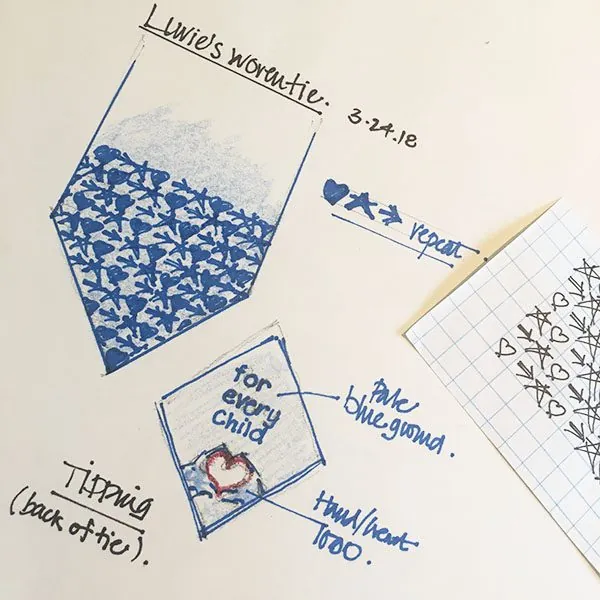
Start with the hospital's colors and crest, then look at its buildings and any art it owns. The Lurie Children's silk scarf and tie at the top of this page were designed with a student from the Art Institute of Chicago. We draw every gift from scratch around the client's story and keep it exclusive to that client. Emma draws each design by hand, and we make samples for your approval. You can read more about how a Harris Made project works.
Match the gift to the level of giving
- First gifts and giving society members. A lapel pin from $15, in enamel and in the hospital's colors.
- Leadership donors. A bespoke silk tie from $48 or a bespoke silk scarf from $65.
- Campaign donors. A silk pashmina gift set from $90, hand-wrapped in a gold or silver foil-embossed box, or a cashmere wrap from $95.
- A completed pledge or a named gift. A cast-brass paperweight from $58, engraved with the crest.
These are starting prices, and the final cost depends on the design and the quantity. Our page on stewardship gifts for major donors covers recognition across giving levels.

Recognize the caregivers patients name
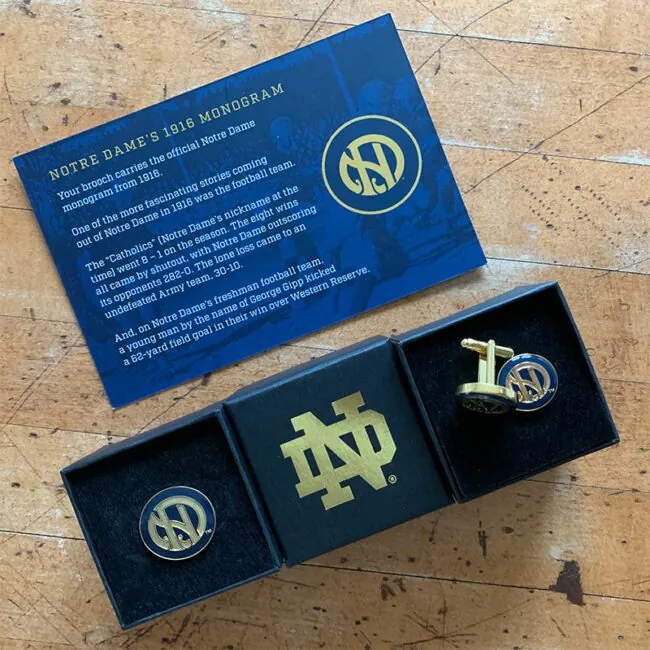
When a patient honors a nurse or physician, the caregiver can receive something too. A lapel pin or a brooch from $38 in the hospital's colors suits this, sent with a notecard carrying the donor's words. For physicians, check any gift with your compliance office first.
The box and the card carry the message
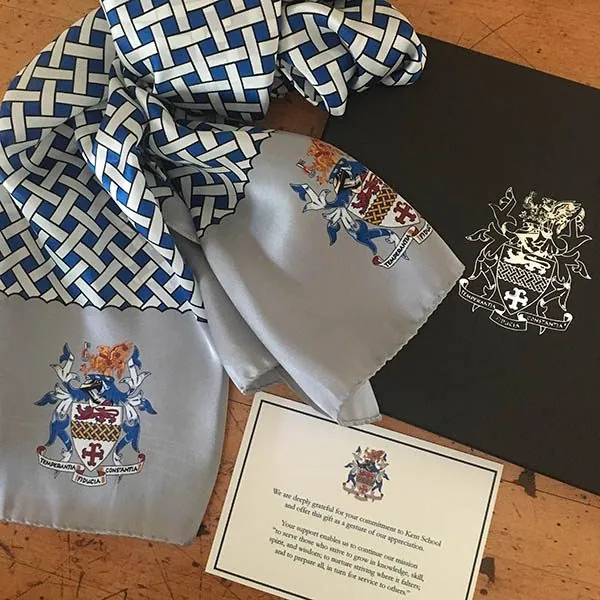
Each gift is hand-wrapped in a foil-embossed presentation box branded for the hospital, with the thank-you message printed on a notecard and the gift's provenance on the reverse. Write that message with the same care as the letter. It can thank the donor and say what their gift supports, and it should leave their care out entirely.
Metrics show whether the program is working
Track a small set of measures from the start, and review them each quarter with physician leaders.
| Measure | What it tells you |
|---|---|
| Referrals per month, by department and by referrer | Whether physicians and nurses are engaged, and where |
| Referrals that lead to a first meeting | Whether the foundation follows up well |
| Days from referral to first contact | Whether the team keeps to the agreed window |
| New grateful patient donors | Whether the program is growing the donor base |
| Average first gift | Where new donors start |
| Retention of grateful patient donors | Whether the thanks and stewardship are working |
| Opt-out rate | Whether outreach feels welcome |
| Upgrades to major gifts | Whether the program reaches its long-term goal |
| Referrers thanked | Whether physicians and nurses hear what happened |
A checklist before launch
- Leadership approval, a budget and a named owner for each step.
- Physician and nursing champions in the departments where you will start.
- A referral route that takes a caregiver less than a minute.
- A privacy review of the process, the notice of privacy practices and the opt-out.
- One opt-out list that every system reads from.
- A screening and prioritization process.
- Thank-you templates that leave out diagnosis and treatment.
- A recognition plan for donors and for the caregivers they name, with gifts ordered 8 to 16 weeks ahead.
- A quarterly report to physician leaders.
If recognition is the step you are planning now, tell us about your program. Most projects take 8 to 16 weeks and the requested minimum is 125 per design. Every design is made in Britain and kept exclusive to your hospital. See our donor recognition gifts for hospitals and health foundations, or start a project with Emma.
Frequently asked questions
What is a grateful patient program?
It is a hospital foundation's system for finding patients and families who want to give thanks for their care, and giving them a way to do it. Physicians and nurses refer grateful patients to the foundation, which reaches out after the stay and, when a gift comes, thanks both the donor and the referrer.
What is a grateful patient?
A grateful patient is a patient, or a member of their family, who wants to support the hospital because of the care they received. In a children's hospital, the grateful donors are usually parents and grandparents.
What patient information can a hospital foundation use for fundraising?
Under section 164.514(f) of the federal Privacy Rule, a hospital may use, or share with an institutionally related foundation, 6 kinds of information without the patient's authorization: demographic information, dates of care, department of service, treating physician, outcome information and health insurance status. Every fundraising message must offer a clear way to opt out. This is general information rather than legal advice, so ask your privacy officer.
How soon after a hospital stay should a foundation reach out?
After discharge, while the experience is fresh, and never during the stay. Agree the contact window with your physicians and privacy officer, and lead with thanks and an invitation rather than a request.
How do you properly thank a grateful patient donor?
Quickly and personally, without referring to their diagnosis or treatment. Follow the first thank-you with updates on what the gift is doing, and if the gift honors a caregiver, tell the caregiver too.
How do physicians take part in a grateful patient program?
They refer patients who express gratitude, introduce them to the foundation and sometimes join visits or events. The foundation reports back on every referral and thanks the physician when a gift results.