The best museum fundraising ideas follow the path a visitor takes to become a supporter: a membership, then a patron circle, a seat at the gala, a campaign gift and, for some, a bequest. Every step up asks for a bigger gift, so each one needs to give the donor something they did not have at the level below.
We wrote this for development teams at museums of every size. Along with ideas for each step, there is a table of membership benefits by level and a section on recognition drawn from the objects in your own collection. Our page on gifts for museums and cultural institutions shows what we have made for museum members, patrons and campaign donors.
Museums depend on the people who love them
Government money has become less certain. In the American Alliance of Museums' 2025 national snapshot, a survey of 511 museum directors, 34% of museums had government grants or contracts canceled. More of the weight now falls on members and private donors, and on the work of moving each of them from 1 level to the next.
The ladder in brief
- Members: clear levels, real benefits and a thank-you at every renewal.
- Patrons: a director's or curator's circle with access no ticket can buy.
- Gala guests: a night themed on the collection, with honorees and sponsors.
- Campaign donors: naming, a quiet phase and a gift that marks the campaign.
- Legacy donors: a society for those who name the museum in their wills.
Member levels turn visitors into supporters
Membership is the first gift most museum donors make, so treat it as the start of a relationship, with each level leading to the next.
Run a membership drive at the door and online
Ask at the front desk, when a visitor has just enjoyed the galleries, and make joining online take a minute. Take the cost of the day's admission off a first membership.
Offer family memberships and a young patrons level
Family memberships bring in parents who visit often. A young patrons level gives people in their 20s and 30s a social way in, with evening events of their own, and Big Sea's museum fundraising guide suggests a "Young Patrons" tier aimed at a specific audience.
Museum membership benefits by level
Each level should add something a member will notice. Here is a simple version:
| Level | Benefits | Recognition |
|---|---|---|
| Individual | Free admission, member news | Membership card and a welcome letter |
| Family | Admission for the household, guest passes, children's programs | A welcome for the children |
| Supporter | Exhibition previews, a shop discount | Name in the members' list |
| Top member level | Curator talks, a listing in the annual report | A lapel pin or brooch drawn from the collection |
| Patron circle | Private views, curator-led tours, travel, dinner with the director | A silk scarf or tie drawn from the collection |
Thank members when they join and when they renew
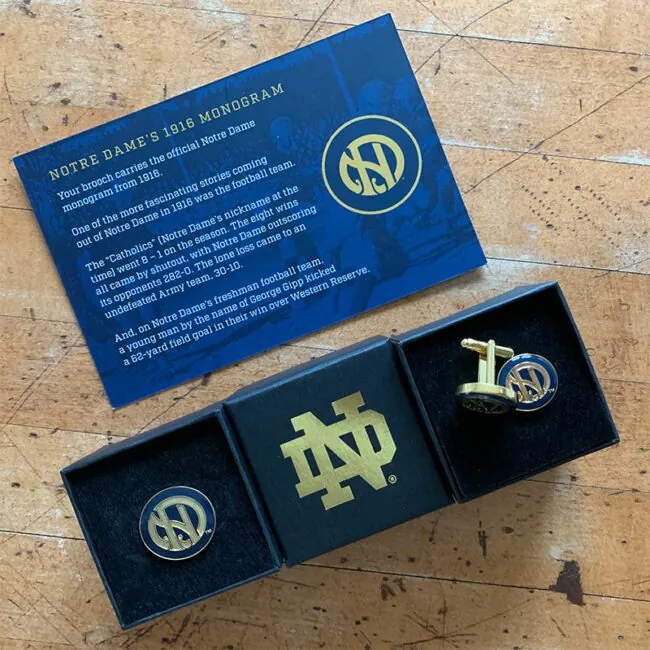
A thank-you on joining and on each anniversary costs little and keeps members renewing. At the upper levels, a lapel pin, from $15, or a brooch, from $38, drawn from an object in the collection gives members something to wear to openings. See pins and brooches in the catalog.
Patron circles bring major donors close to the collection
Above membership sits the patron circle, often called a director's circle or curator's circle. Its members give at major gift levels, and what they want in return is access.
What a patron circle offers
- Private views before an exhibition opens to members.
- Curator-led tours of the galleries, storage and conservation studios.
- Travel with curators to collections, sites and fairs.
- Dinner with the director, in the galleries or at home.
Steward patrons as major donors
A patron circle is a major gift program in all but name. Each patron should have a named contact at the museum and a report on what their gifts made possible, and someone should already be planning the next conversation. Our page on stewardship gifts for patrons and major donors and our guide to donor cultivation cover the work in more detail.
Give the circle a gift from the collection
A silk scarf, from $65, or a silk tie, from $48, drawn from an object in your collection is a fitting mark of the circle, and patrons can wear it to the next private view.
A museum gala is the biggest night of the year
Big Sea counts galas and charity auctions among the highest-grossing events for institutions with strong donor networks. A museum has an advantage over most hosts here, since it can hold the gala in its own galleries.
Theme the night on the season's exhibition
Serve dinner among the objects, and let the menu and dress code echo the exhibition. A short talk from its curator gives guests something to talk about on the way home.
Sell tables to sponsors and name honorees
Table sponsors cover the cost of the night, so the auction and the paddle raise go to the mission. An honoree, such as a long-serving trustee or a lead donor, gives guests a reason to come and the program a story to tell. Our post on sponsorship gifts covers how to thank sponsors afterward.
Auction what money cannot buy
Experiences only your museum can offer, like a morning in the conservation studio or dinner in a closed gallery, often draw more bids than a donated holiday. A private tour with the director is another good lot.
Hold a young patrons party
A later, less formal party on the same night, or the night after, brings in younger supporters at a lower ticket price and starts them up the ladder.
Thank honorees and chairs with a gift
Gala chairs give months of work to the night. Thank them, and the honorees, with a piece drawn from the collection, and plan it early, since most of our projects take 8 to 16 weeks. Our fundraising gala ideas cover the rest of the evening.
Smaller events bring in new audiences
Smaller events raise less money, though they bring people through the door who may later become members. Some that work well for museums:
- After-hours parties with music and a bar in the galleries.
- Paint and sip evenings led by a local artist.
- A fashion show drawn from the collection's textiles or a current exhibition.
- A golf tournament for local businesses and their clients.
- A family sleepover night among the exhibits.
- Behind-the-scenes tours of storage and conservation.
- Paid workshops in drawing, photography or a craft linked to the collection.
Campaigns fund buildings, galleries and endowments
A new wing or a gallery renovation needs a campaign, and so does an endowment for curators. Big Sea describes the shape most campaigns take.
Secure lead gifts in the quiet phase
In the quiet phase, the museum secures lead gifts from major donors before anything is announced, so by the time the public phase begins and the wider appeal goes out, the goal is already in reach.
Offer galleries and curator positions for naming
Galleries and endowed curator positions can carry a donor's name, and so can smaller dedicated spaces, which gives lead donors a lasting reason to give at the highest levels. Set the prices before the quiet phase begins.
Mark the campaign with a gift of its own
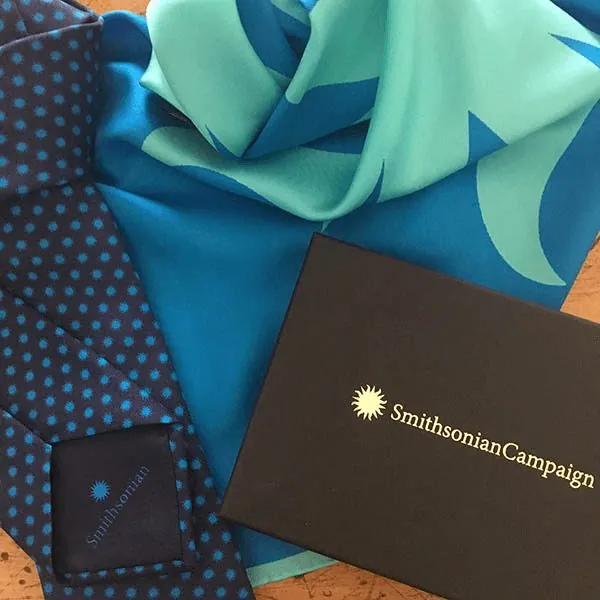
For the Smithsonian Campaign, we made a silk scarf and tie built on the Smithsonian sunburst, presented in a box made for the campaign. Read the Smithsonian sunburst scarf and tie story, and see our capital campaign examples for more.
Donors can adopt an object or join a named appeal
Not every donor is ready for a campaign gift, and these ideas give smaller donors a specific way to help.
Adopt an artifact
Big Sea describes adoption programs in which patrons adopt a specific artifact for a set period, usually a year, with larger benefits at higher levels. The money pays for the care of the collection and for new acquisitions, and the donor gets to follow the object they adopted.
Run a named appeal with 1 clear goal
MuseumNext's guide for small museums has some good examples. Kelvingrove Art Gallery and Museum raised £600,000 for its refurbishment appeal and listed all 9,500 contributors on a plaque, and at the Science Museum, 861 people donated to rebuild Eric the robot. The one we like best is the Museum of East Anglian Life, which let visitors adopt a pig for £5.
The same guide advises picking a project with a distinct beginning, middle and end, and starting with the supporters you already have before you reach for new ones.
Make giving easy at the door
Put text-to-give signs and donation kiosks in the busiest spots, where they catch visitors while the galleries are still fresh in their minds.
Earned income and corporate partners widen the base
Shop merchandise sold for a cause, subscription boxes, paid workshops and tours, cause marketing and corporate sponsorship all bring in money beyond gifts. They also reach people who may never join.
Keep the shop and recognition apart, though. A patron's gift should be something no visitor could pick up at the register on the way out, which is why every Harris Made gift is exclusive to the institution that commissioned it and never sold to anyone else.
Planned gifts secure the collection's future
A legacy society for donors who name the museum in their wills recognizes gifts that may not arrive for decades. Give members a pin or brooch as the mark of the society and, with their permission, list them in the annual report. Once a year, invite them to a gathering with the director. Our guide to legacy society recognition covers the rest.
Recognition drawn from the collection keeps donors close
Every museum has its own objects to draw from, and a gift based on one of them shows the donor exactly what their support protects.
Start from an object
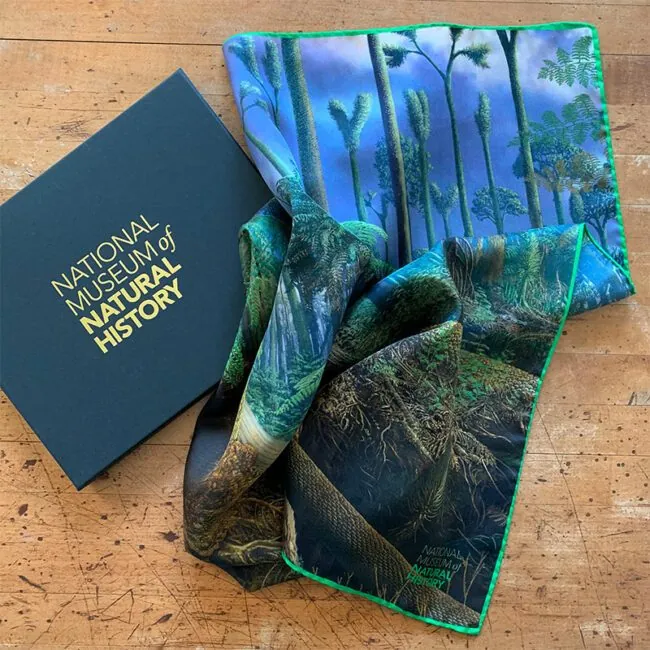
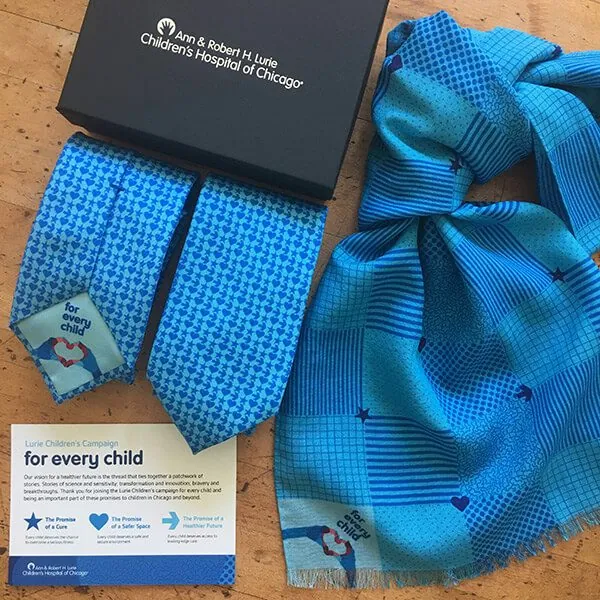
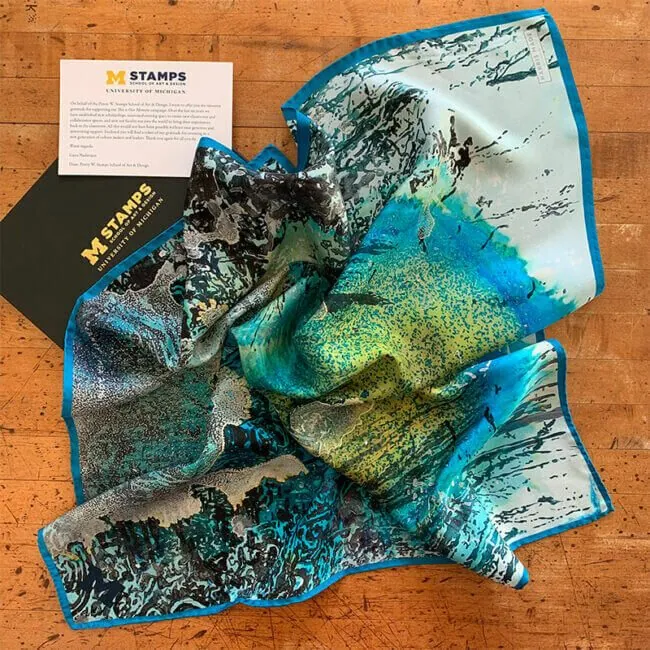
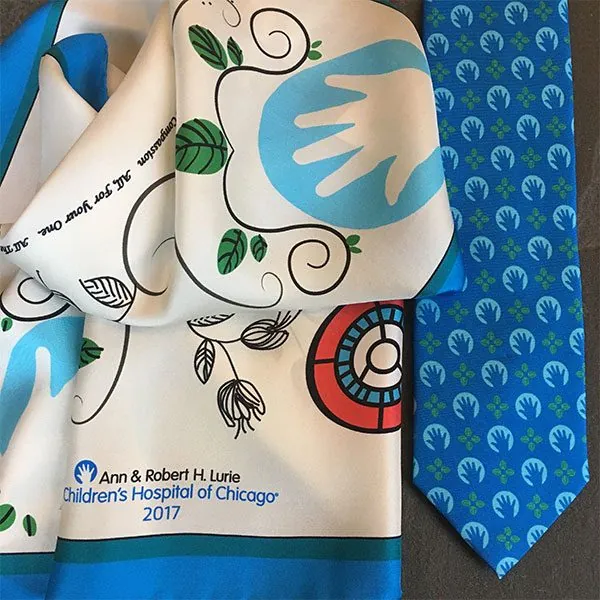
The National Museum of Natural History's scarf is printed with a Carboniferous forest. A mosaic can work just as well, and for the University of Chicago we made a scarf drawn from a Babylonian lion mosaic at the Oriental Institute. The Penny W. Stamps School of Art & Design's scarf came from an alumnus's painting, 'Autofagia' by Jon Verney. For Lurie Children's Hospital, we designed a silk scarf and tie together with a student from the Art Institute of Chicago.
Choose the craft that suits the object
Printed silk twill
A bespoke silk scarf, from $65, is printed on lustrous silk twill. Twill holds fine detail well enough to carry a whole painting, as the Stamps School scarf does. Our guide on how to design a custom silk scarf explains how a design is drawn.
Devoré
A devoré scarf, from $72, has the pattern burned into the cloth itself, so it shows against the light. It suits an object known for its outline or its texture. See silk and devoré scarves in the catalog.
Let the provenance travel with the gift
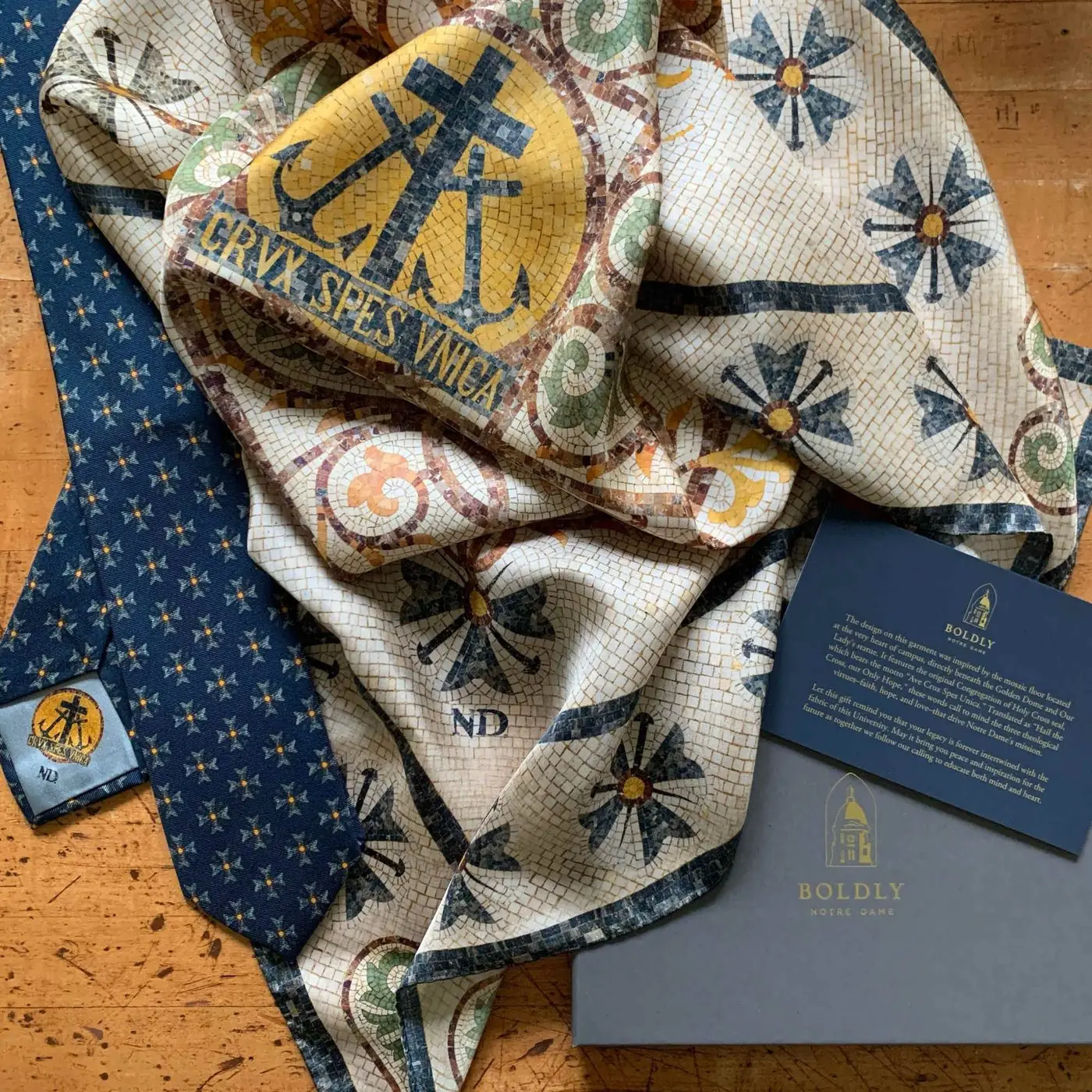
Museum people care about provenance, and so do we. Every gift is hand-wrapped in a foil-embossed presentation box branded for the museum. Your thank-you message goes on a notecard inside, with the gift's provenance printed on the reverse, so the donor can read where the design came from.
"Harris Made designs are made with such precision, sophistication, and embody a rich story of tradition. They are the perfect recognition gifts for our most loyal alumni and friends." Emily Abrahamson, Donor Engagement, University of Chicago
Timing, minimum and price
Emma designs each gift from a hand-drawn sketch, and we make samples for your approval before anything goes into production in Britain. Most projects take 8 to 16 weeks. Our requested minimum is 125 per design, with prices starting from $15. Our process page shows how a Harris Made project works, and you can start a project whenever you are ready.

Frequently asked questions
What are the best fundraising ideas for a museum?
Membership levels, a patron circle, an annual gala, an adopt an artifact program and a capital campaign for big projects. Smaller museums do best starting with the supporters they already have and 1 clear project.
What benefits should a museum membership include?
Free admission and member news at every level, then guest passes and family programs, then exhibition previews and a shop discount. At the top, add curator talks, a listing in the annual report and a member gift.
What is a museum patron circle?
A giving level above membership, often called a director's circle or curator's circle. Members receive private views, curator-led tours, travel with curators and dinners with the director.
How do museums plan a gala?
Pick a theme tied to the collection or the season's exhibition, sell tables to sponsors, name honorees and add an auction of experiences money cannot buy. Plan honoree gifts early, since most bespoke projects take 8 to 16 weeks.
What kind of fundraisers bring in the most money?
Major gifts and campaigns. Among events, galas and charity auctions gross the most for museums with strong donor networks, and most of the money comes from a small share of donors.
What gifts do museums give donors and members?
Pins and brooches for members, and scarves, ties or desk pieces drawn from the collection for patrons and campaign donors. For the Smithsonian Campaign, we made a silk scarf and tie built on the Smithsonian sunburst.